
Our Art and Architecture
“Like living stones, let yourselves be built into a spiritual house”~1 Peter 2.5
Since 1869, before the Columbian Exposition and the foundation of the University of Chicago, Saint Thomas the Apostle Parish has been adding to the rich diversity of Hyde Park.
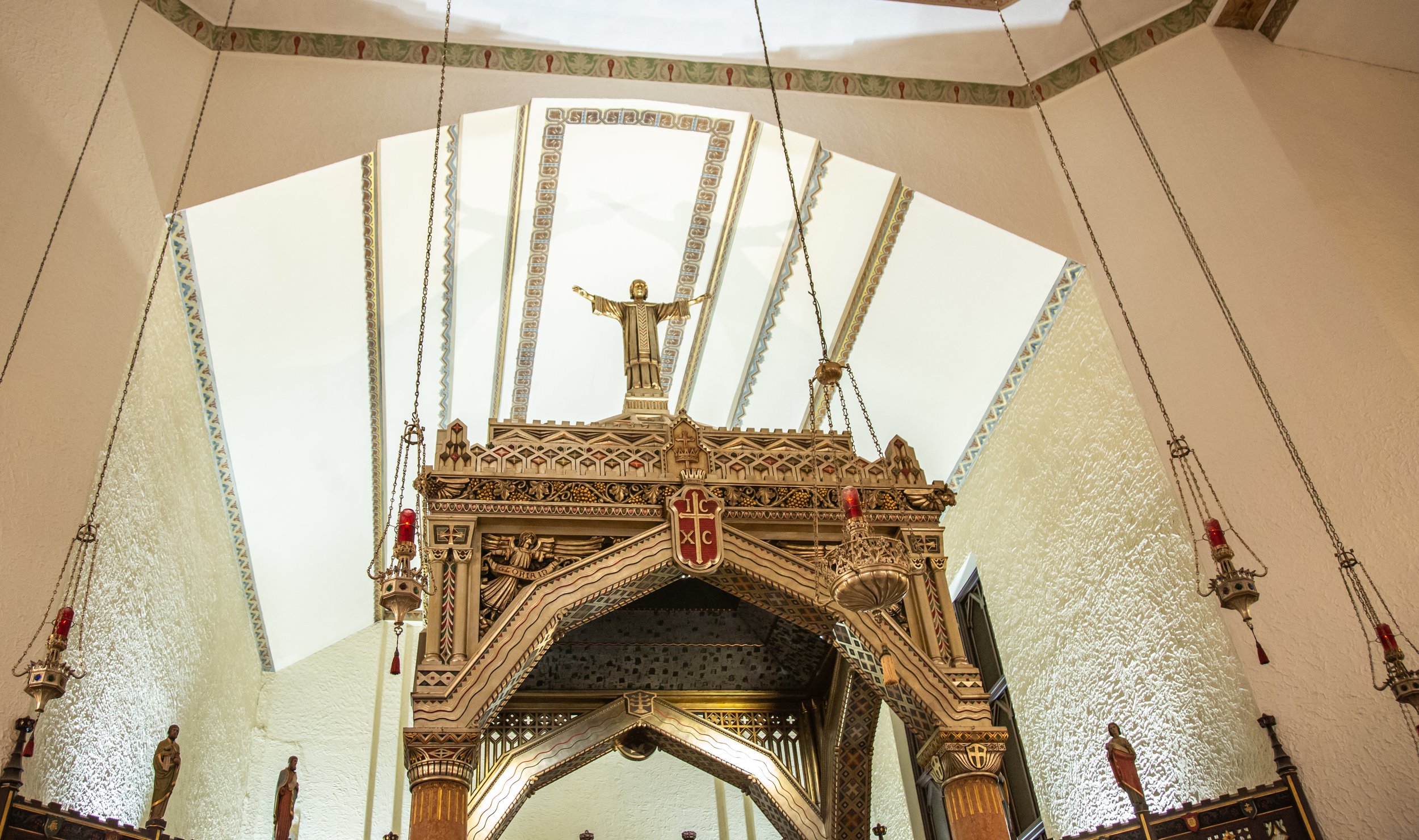
As a congregation, we are heirs to magnificent devotional artwork including the bronze bas-relief Stations of the Cross and Pietà in art moderne by Alfeo Faggi and original stained glass windows designed by Valentine d’Ogries. Our present church was designed by the renowned architect Francis Barry Byrne.
Completed in 1924, Saint Thomas the Apostle’s current house of worship features a non-cruciform floor plan, 25 ft. high stained glass windows, and a ceiling that spans more than 125 feet with no interior pillars or visible supports. It has been called the first modern American church as it does not repeat European (Italian or German) designs as was common in Catholic churches built in that era. The exterior façade is adorned with terra cotta by Alfonso Iannelli with finials by Edgar Miller. Our church and convent were listed on the National Register of Historic Buildings in 1978.
Many of our original works of devotional art are cataloged in the Smithsonian Institution. From the statue of St. Thomas in front of our main West doors to our magnificent oil paintings by William E. Schumacher hanging in the rear of the nave, to Milton Horn’s, “Jacob’s Struggle” in the Baptistery, we invite you to learn about the building and sacred space during one of our guided architectural tours. Free tours are offered by appointment. Brochures describing the art are located at the welcome table in the narthex.
Meet the great architect.
Francis Barry Byrne
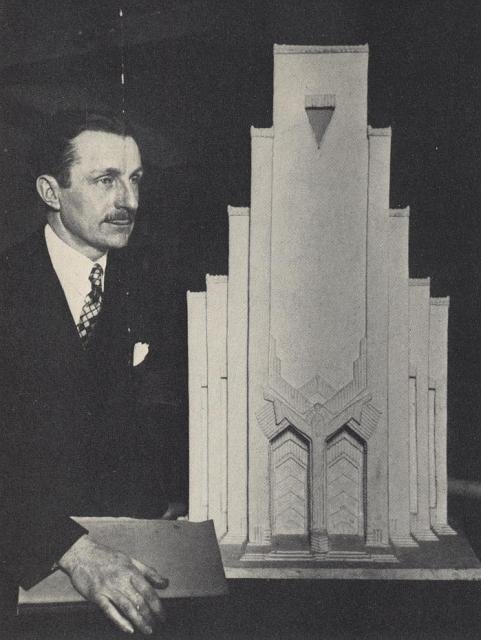
The present church was constructed under the 10th pastor, Fr. Thomas Vincent Shannon. Fr. Shannon was intellectual and cultured, with ambitious building plans for the parish. He chose as the architect of the new church Francis Barry Byrne (1883-1967), who as a young man had apprenticed in the Oak Park studio of Frank Lloyd Wright. Shannon and Byrne met at the University of Chicago, where they were members of the Medievalists Club.
Both Shannon and Byrne rejected the revival styles so common in church architecture of that time, believing that the Church should use the technology and style of its own age.
In early in 1922, he asked Byrne to draw up plans for a new church. Construction began the following year and the church was dedicated on October 12, 1924.
Barry Byrne was a practicing Catholic who was active in the liturgical reform movement of the early 20th century. At St. Thomas, which was his first church, his design combines the reform movement's emphasis on openness and lay participation
Some of our artwork
-
Pieta
It all begins with an idea. Maybe you want to launch a business. Maybe you want to turn a hobby into something more. Or maybe you have a creative project to share with the world. Whatever it is, the way you tell your story online can make all the difference.
-
Stations of the Cross
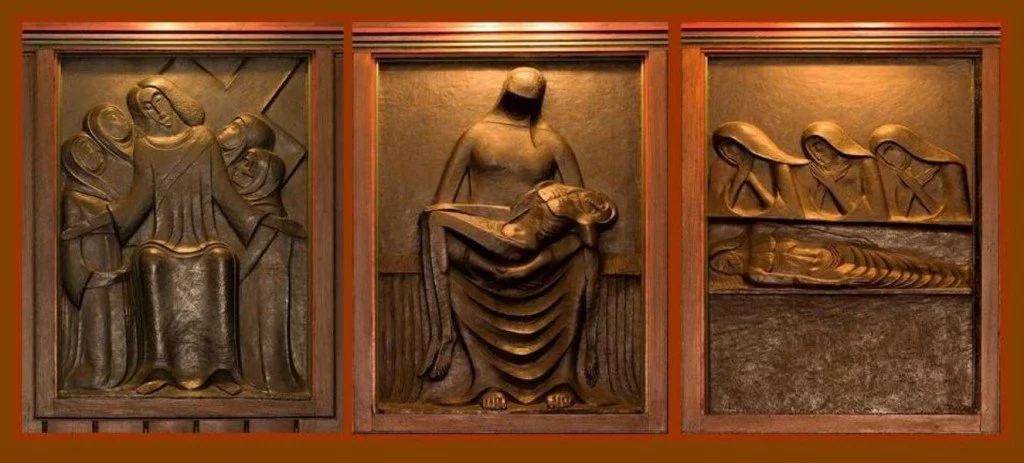
Alfeo Faggi’s 8th, 13th and 14th Stations
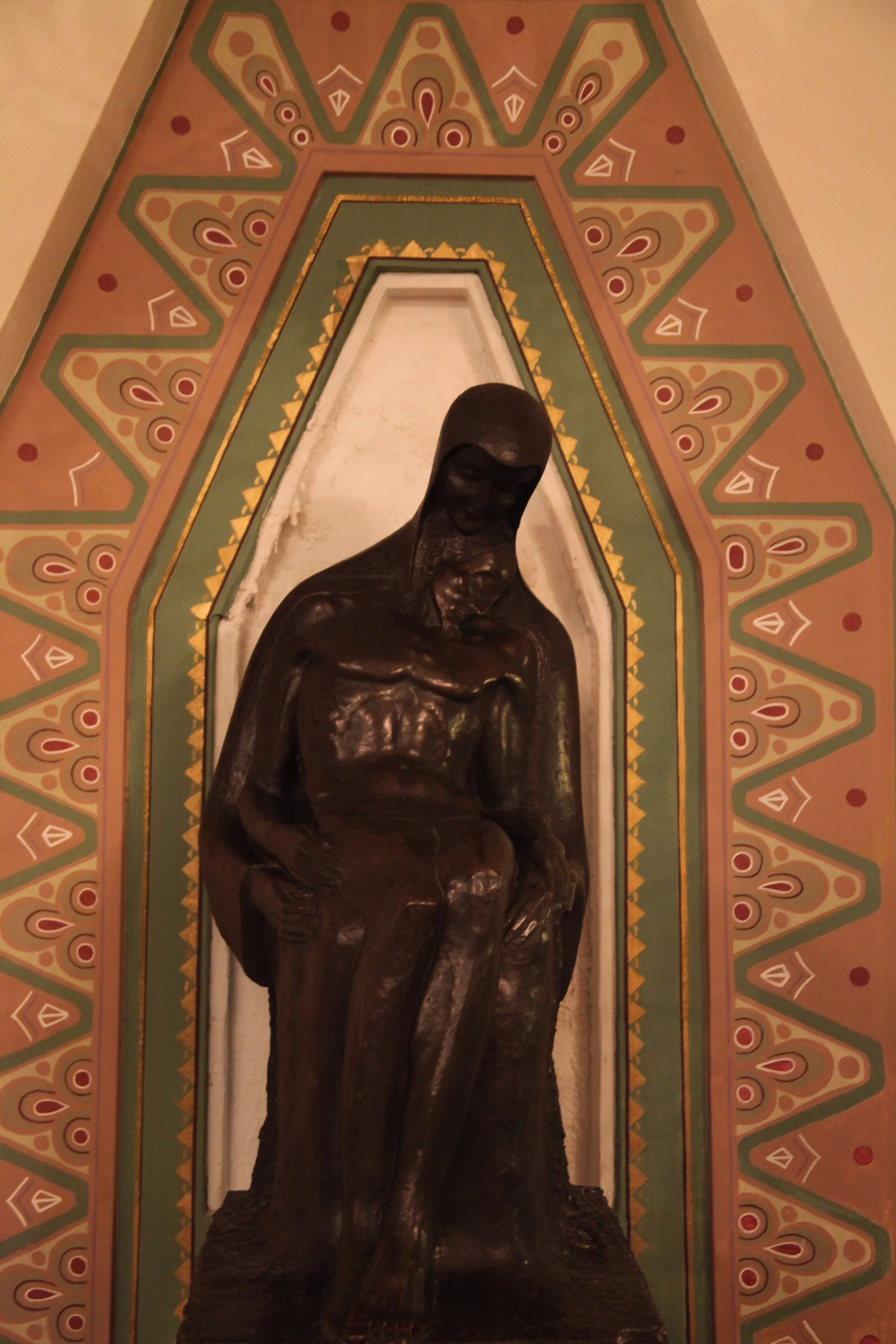
Our fourteen Stations of the Cross and the monumental Pietà were created by sculptor Alfeo Faggi (1885 – 1966) and commissioned by Mrs. Frank R. Lillie. They are widely considered to be among Faggi’s greatest works.
The Stations are done in bronze and are low bas-relief with bold, elongated forms and minimal details. The Pietà is a thematic representation of the thirteenth Station in which the Mother of God is realized 3-dimentionally while the figure of the collapsed Christ is flattened against her, as if to highlight that the mother and child both share the one flesh and share a common suffering.
-
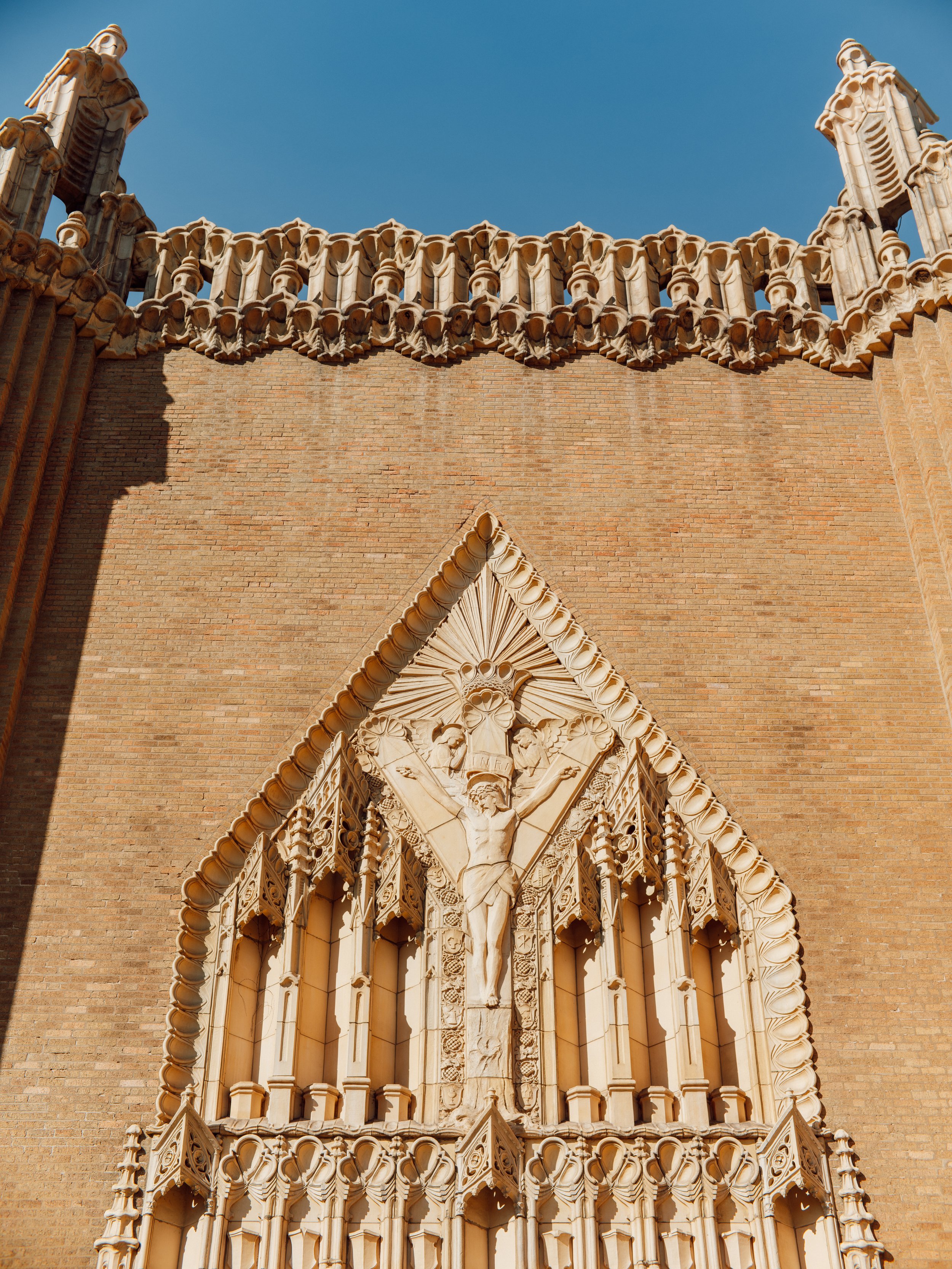
Our Front Door
On the Kimbark side of the Church you will find the striking front door with the terra cotta image of the crucified Christ done by Alfonso Ianelli.